Before your visit
Hearing tests are by appointment. Call 682-936-4081 to book at our Granbury office, 4425 E US Hwy 377, Suite 106, or ask about our Weatherford office on Mondays at 1212 Clear Lake Rd.
A little preparation helps:
- Make a list of what you notice. For example, trouble on the phone, in restaurants or with the TV. Note whether one ear seems worse.
- Bring your medication list. Some medications can affect hearing or cause ringing in the ears.
- Bring any past hearing tests. Earlier results help us see change over time.
- Bring your hearing aids, if you already wear them.
- Consider bringing a family member. A familiar voice can be useful during testing, and a second set of ears helps when we go over results.
- Avoid loud noise for a day beforehand, if you can. Recent loud noise can temporarily shift your hearing.
If you are curious before you come in, our free online hearing check gives a rough sense of how you hear soft sounds. It is a screening, not a diagnosis, and it does not replace a full test.
Step 1: A conversation about your hearing
We start by listening. We ask when you first noticed a change, which situations are hardest, whether you have ringing in your ears, dizziness, ear pain or drainage, and whether you have been around loud noise at work or for hobbies. We also ask about your family history and general health.
This matters because the right next step depends on the cause. Some causes, such as earwax or fluid behind the eardrum, are medical problems that can often be treated. Others, such as age-related hearing loss, are usually managed with hearing aids.
Step 2: Looking in your ears
Next, we examine your ear canals and eardrums with an otoscope, a small light with a magnifier. We are checking for earwax, infection, a hole in the eardrum or anything else that could block sound. If a lot of wax is blocking the canal, it may need to be removed before testing gives accurate results. Our article on earwax removal explains when that is needed.
Step 3: Pure-tone audiometry
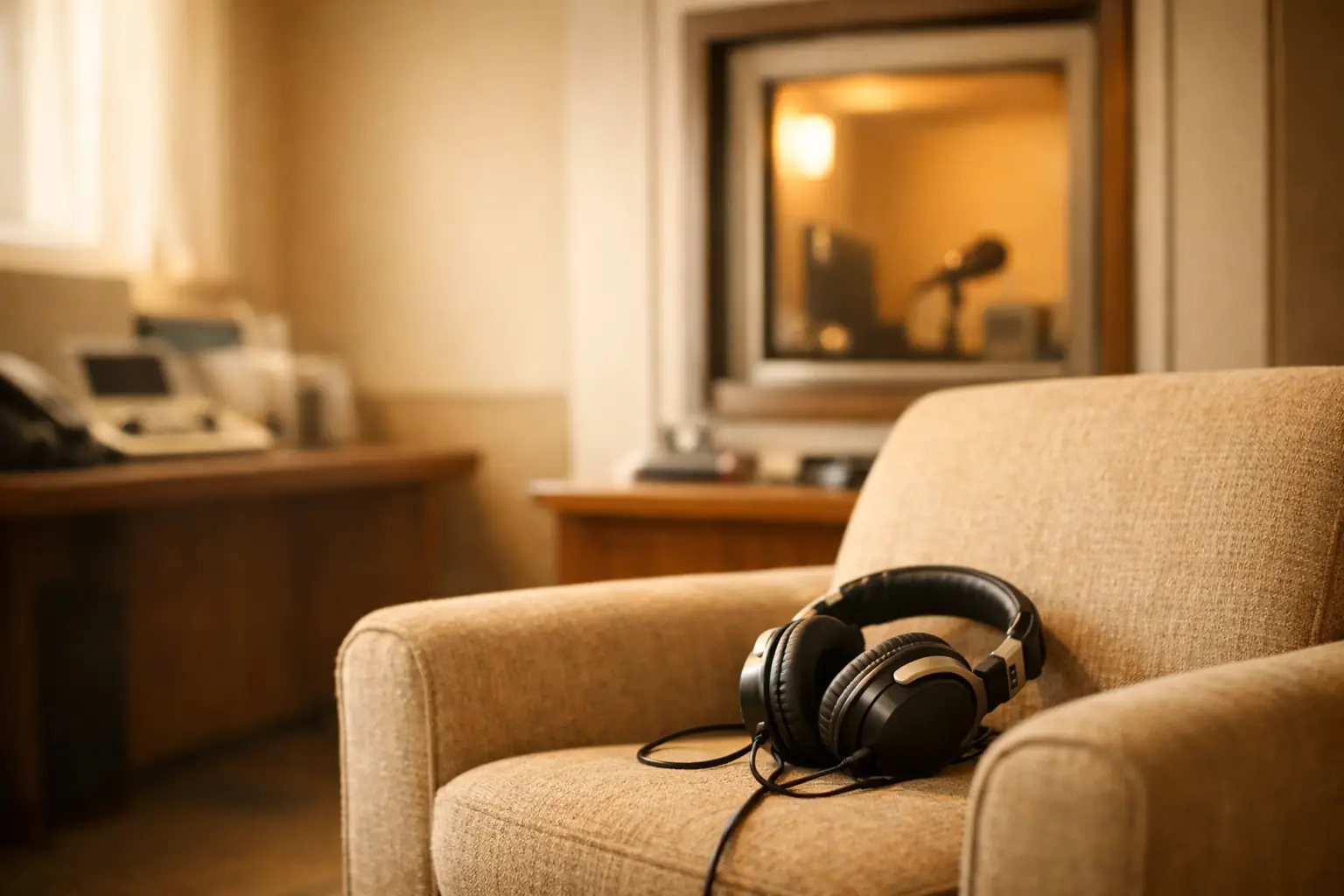
This is the part most people picture. You sit in a quiet room or sound booth wearing headphones or small foam earphones. You hear a series of beeps at different pitches, from low to high, and you press a button or raise your hand every time you hear one, even if it is very faint.
The goal is to find your threshold: the softest sound you can hear about half the time at each pitch. Results are measured in decibels hearing level (dB HL). Each ear is tested separately.
We may also do bone conduction testing. A small vibrating band rests behind your ear and sends sound directly to the inner ear, bypassing the outer and middle ear. Comparing these results with the headphone results shows whether the hearing loss comes from the outer or middle ear (conductive), the inner ear or nerve (sensorineural), or both (mixed). Our page on hearing loss explains these types.
Step 4: Speech testing
Hearing beeps is not the same as understanding people. Speech tests measure how well you hear and understand words:
- Speech reception threshold: the softest level at which you can repeat simple two-syllable words.
- Word recognition: you repeat a list of single words played at a comfortable level, and we score the percentage you get right.
Some people hear speech loudly enough but still find it unclear. Word recognition scores help us set realistic expectations for hearing aids.
Step 5: Tympanometry
Tympanometry checks how your eardrum moves. A soft tip rests in the ear canal and gently changes the air pressure for a few seconds while measuring the eardrum's response. It can point to fluid behind the eardrum, a hole in the eardrum, a blocked Eustachian tube or problems with the small bones of the middle ear. It does not require you to respond, and most people only feel slight pressure.
Step 6: Reading your audiogram together
Your results are plotted on an audiogram, a chart with pitch from low to high across the top and loudness down the side. The lower your marks sit on the chart, the louder a sound had to be before you heard it.
The American Speech-Language-Hearing Association (ASHA) describes degrees of hearing loss in ranges, from slight and mild through moderate, moderately severe, severe and profound. We explain where your results fall for each ear, which sounds you are likely missing (high-pitched consonants such as "s," "f" and "th" are often the first to go), and what that means in your daily life.
What happens next
Depending on your results, next steps may include:
- No treatment needed, with a plan to retest in the future.
- Medical care, such as earwax removal or treatment for an ear infection. Dr. Salim Bhaloo, DO, a board-certified otolaryngologist, can evaluate medical and surgical causes of hearing loss in the same practice.
- Hearing aids. If they would help, we talk through styles, technology levels and your budget. See hearing aids for the styles we fit.
- Tinnitus care, if ringing or buzzing is part of the picture. See hearing aids and tinnitus.
Hearing tests for children
Unlike most hearing practices, we see both adults and children. Testing is adapted to a child's age and attention span. If your child has failed a hearing screening at school, call us so we can find the cause and start treatment as soon as possible.
How often should you have your hearing tested?
There is no single schedule that suits everyone. As a general guide, ASHA recommends that adults have their hearing screened at least every decade through age 50 and every three years after that. Get tested sooner if you notice a change, have ringing in your ears, or work around loud noise. If you wear hearing aids, a regular retest helps keep them programmed to your current hearing.
The National Institute on Deafness and Other Communication Disorders (NIDCD) reports that about one in three people between 65 and 74 has hearing loss, and nearly half of those older than 75 have difficulty hearing. That makes a baseline test worthwhile even when you feel fine.
Getting here
Our Granbury office is on E US Hwy 377 and is open Monday to Thursday, 8 am to 5 pm, and Friday, 8 am to noon. We also see patients in Weatherford on Mondays. Patients come to us from across Hood, Parker, Johnson, Somervell and Erath counties. See our Granbury location for directions.
Frequently asked questions
Does a hearing test hurt?
No. You listen to sounds and respond. Tympanometry creates a brief feeling of pressure in the ear, and that is all.
Do I need an appointment?
Yes. Hearing tests are by appointment. Call 682-936-4081 and we will find a time that works for you.
Do I need a referral?
Some insurance plans require a referral for a hearing test and some do not. Call us with your plan details and we can help you check.
Will I get my results the same day?
Yes. We go over your audiogram with you at the end of the visit and explain what it means.
Can I bring someone with me?
Yes, and we encourage it. A family member can help you remember the details and can share what they notice about your hearing.
Sources
- American Speech-Language-Hearing Association (ASHA), "Degree of Hearing Loss" and "Adult Hearing Screening"
- American Academy of Audiology (AAA), "Hearing Testing" consumer information
- National Institute on Deafness and Other Communication Disorders (NIDCD), "Age-Related Hearing Loss (Presbycusis)"
This article is general information, not a diagnosis. Talk with a provider about your own symptoms.