How each type works
Rechargeable hearing aids
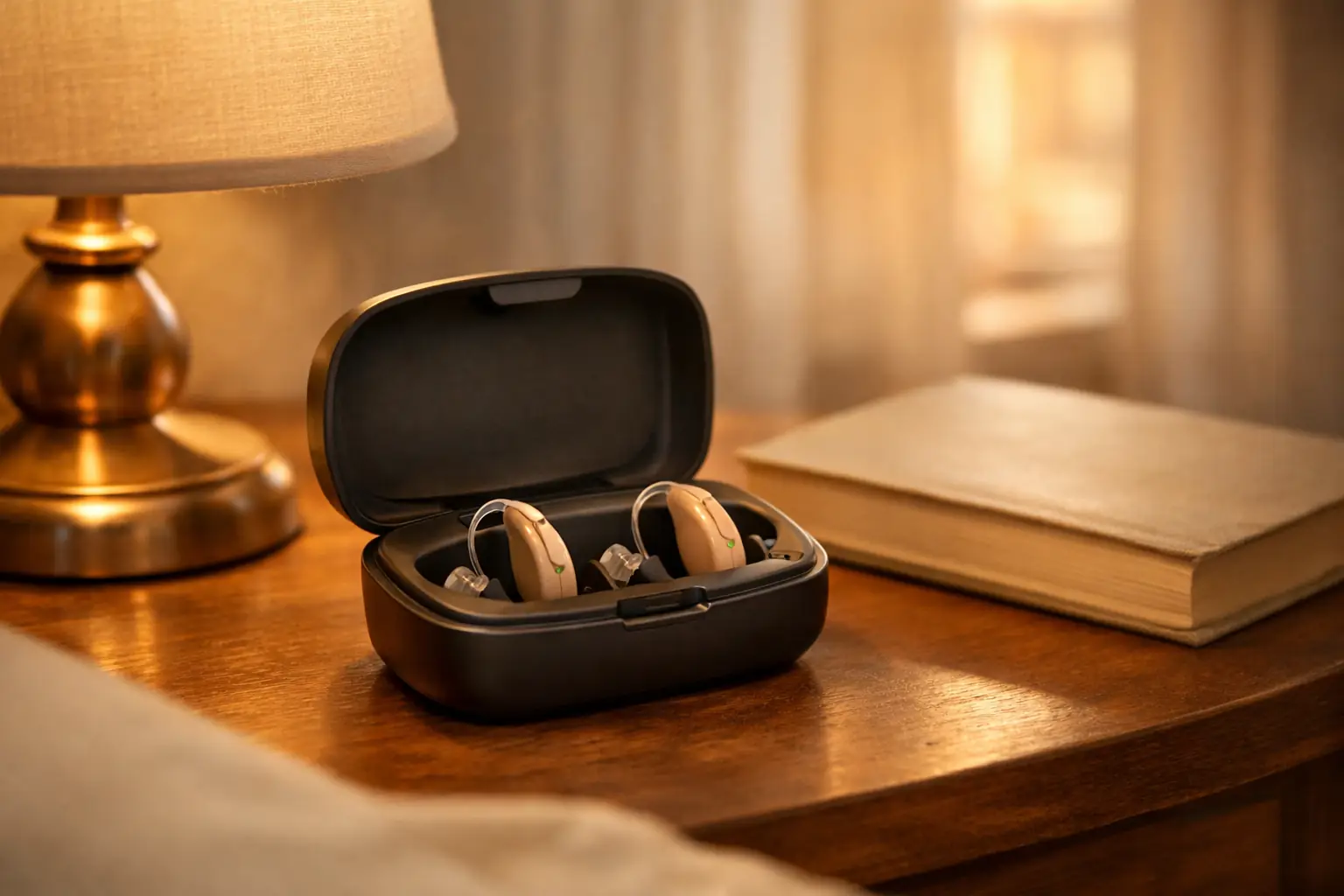
Most rechargeable hearing aids use a built-in lithium-ion battery. You place them in a charging case or dock at night and take them out fully charged in the morning. Many charging cases also act as a protective storage case, and some have their own battery so you can recharge on the go.
A full charge is generally designed to last a full waking day. Streaming audio from a phone or TV over Bluetooth uses more power, so heavy streamers may get less time from a charge. Manufacturers publish their own estimates for each model, and your provider can tell you what to expect from the devices you are considering.
Like the battery in a phone, a lithium-ion battery slowly loses capacity over years of charging. When it no longer gets you through a day, it is usually replaced by the manufacturer or the provider rather than by you.
Battery hearing aids
Disposable hearing aid batteries are zinc-air cells. They are activated when you peel off a small sticker that lets air in. Once activated, they run until they are drained, whether or not you are wearing the hearing aids.
Batteries come in four standard sizes, each with a color-coded tab so they are easy to tell apart:
- Size 10 (yellow): the smallest, used in many tiny in-canal and receiver-in-canal devices
- Size 312 (brown): a common size in small behind-the-ear and in-the-ear devices
- Size 13 (orange): used in larger behind-the-ear and in-the-ear devices
- Size 675 (blue): the largest, used in powerful behind-the-ear devices for severe hearing loss
Smaller batteries run down faster. Depending on the size, how many hours you wear your hearing aids and how much you stream, a battery may last from a few days to a couple of weeks.
Rechargeable: the advantages
- No tiny batteries to handle. This is the biggest benefit for people with arthritis, tremors, reduced feeling in their fingers or low vision.
- A simple routine. Charge at night, wear during the day.
- Less waste. You are not throwing away dozens of small batteries each year.
- Sealed designs. Without a battery door, some rechargeable devices are better protected against moisture and dust.
- Easy streaming. Rechargeable models are often designed with Bluetooth streaming in mind.
Rechargeable: the trade-offs
- You must remember to charge. If you forget, or the power goes out, you may start the day with low battery.
- You need the charger when you travel. For a long trip, pack the charging case and its cable.
- Size. Built-in batteries can make some styles slightly larger. Very small, deep-canal styles may not be available as rechargeable.
- Battery aging. The rechargeable battery eventually wears out and needs replacing, usually through the manufacturer or provider.
Disposable batteries: the advantages
- Instant power. A fresh battery takes seconds to swap, anywhere.
- No charger needed. Useful for camping, hunting, long trips, or anywhere power is unreliable.
- Smallest styles. The tiniest custom in-canal hearing aids often rely on size 10 batteries.
- Predictable. Many people get into a rhythm of changing batteries on the same day each week.
Disposable batteries: the trade-offs
- Fiddly to handle. Size 10 and 312 batteries are very small. Most people use the magnetic stick that comes with the pack, but they can still be hard to manage.
- Ongoing cost. Batteries are an ongoing expense over the life of the hearing aids.
- Safety around children and pets. Swallowed button batteries are dangerous. Store batteries, new and used, out of reach, and seek emergency care immediately if one is swallowed. National Capital Poison Center guidance is to call the National Battery Ingestion Hotline at 800-498-8666, or 911, right away.
- Running out at the wrong moment. Many hearing aids give a warning tone when the battery is low, so carry a spare.
Tips for disposable batteries
- Let them breathe. After you peel off the tab, wait about a minute before inserting the battery so it can fully activate.
- Store at room temperature. Avoid the refrigerator and hot cars.
- Open the battery door at night. This helps the battery last and lets moisture escape.
- Wash and dry your hands first. Oil and dirt can affect the contacts.
Tips for rechargeable hearing aids
- Charge every night, even if there is charge left. Lithium-ion batteries handle regular charging well.
- Keep the charger clean and dry. Wipe the contacts as your provider recommends.
- Seat them properly. Make sure each hearing aid clicks into place and the charging light comes on.
- Plan for trips. Pack the charger and check whether its case has a built-in battery.
Which is better for you?
Ask yourself:
- How easy is it for me to handle small objects? If it is hard, rechargeable is usually the better choice.
- How many hours a day do I wear hearing aids, and how much do I stream? Long days and heavy streaming need a model with plenty of battery life.
- Where do I spend my time? Frequent travel to places without reliable power favors disposable batteries, or a charger with its own battery.
- How small do I want my hearing aids to be? The very smallest styles may only come with disposable batteries.
- What does my hearing loss need? Severe and profound hearing loss sometimes needs a more powerful device, which affects the options.
Both types can work well. The best choice is the one you will actually use every day.
How it fits with style and technology
Battery type is only one decision. You will also choose a style, such as behind the ear, in the ear or completely in canal, and a technology level. See the styles on our hearing aids page. Our guide to hearing aid costs explains how features like rechargeability affect price, and OTC vs prescription hearing aids compares buying routes.
At Clear Choice, our Doctor of Audiology fits ReSound, Oticon and Phonak hearing aids, among other manufacturers, at our Granbury office, and we see patients in Weatherford on Mondays. Bring your questions about batteries to your fitting and we can show you both options in hand.
Frequently asked questions
How long do rechargeable hearing aids last on one charge?
Most are designed to last a full waking day on a single overnight charge. Streaming uses more power. Check the manufacturer's estimate for the specific model.
How long do hearing aid batteries last?
It depends on the battery size, how many hours you wear the hearing aids and how much you stream. Smaller batteries run down faster, typically lasting from a few days to around two weeks.
Can I switch from batteries to rechargeable?
Usually not on the same hearing aid. Rechargeable models are designed with a built-in battery. When you replace your hearing aids, you can choose a rechargeable model.
Are rechargeable hearing aids more expensive?
They often cost more up front, but you save on disposable batteries over time. The overall difference depends on the model and how long you keep it.
What if my rechargeable hearing aids will not charge?
Check that they are seated correctly, the contacts are clean and the charger has power. If they still will not charge, call your provider. We help with troubleshooting and repairs.
Sources
- U.S. Food and Drug Administration (FDA), "Types of Hearing Aids"
- American Academy of Audiology (AAA), consumer information on hearing aids
- National Capital Poison Center, "Button Battery Ingestion" guidance and National Battery Ingestion Hotline
- National Institute on Deafness and Other Communication Disorders (NIDCD), "Hearing Aids"
This article is general information, not a diagnosis. Talk with a provider about your own symptoms.